


Sailboat Racing on San Francisco Bay: How It Works and How to Get Started
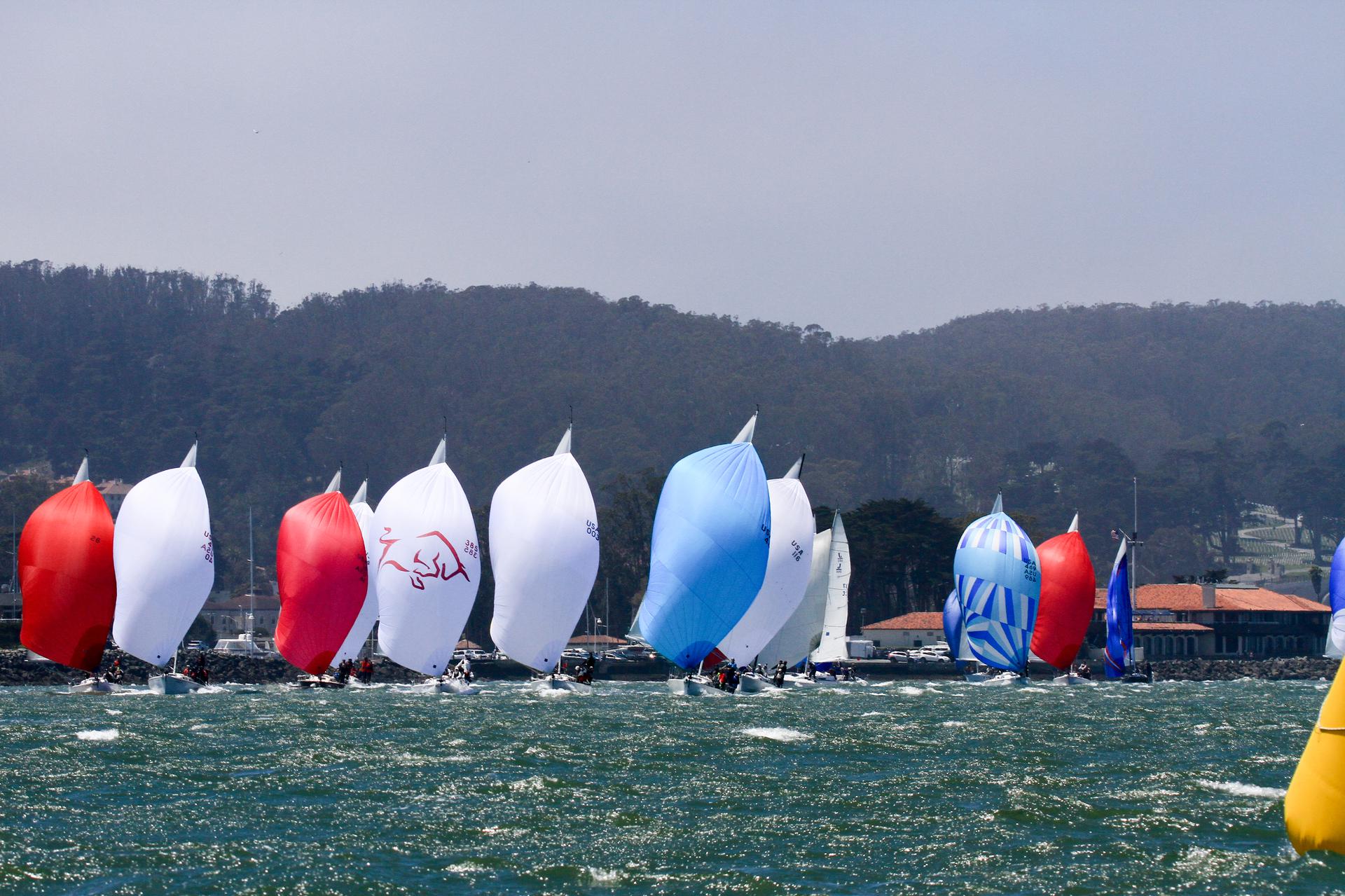
For many sailors, the answer to “Will I like sailboat racing?” is an immediate and enthusiastic yes. Of course, racing isn’t for everyone — and sometimes it takes getting out there for a race or two to find out. But for those who are curious, the real question isn’t whether racing is fun…
It’s: What is sailboat racing actually all about?
At Spinnaker Sailing San Francisco, we meet a lot of sailors who love the idea of racing but don’t quite know how to break into it. Racing can look intimidating from shore — whistles, flags, tight maneuvers, boats converging at speed — but once you understand the basics, it becomes one of the most exciting and rewarding ways to grow as a sailor on San Francisco Bay.
Over the coming months, we’ll be sharing a series of articles designed for sailors who are racing-curious, brand new to competition, looking for their first crew opportunity, or hoping to sharpen skills and confidence on the Bay. Let’s start with the fundamentals.
What’s Going On Out There?
If you head out on the Bay on a summer evening, you’ll often see groups of sailboats all moving in roughly the same direction — sort of. From a distance, it can look confusing, even chaotic. But once you zoom in, you realize something simple:
A sailboat race is just a group of boats sailing the same course, under the same rules, trying to finish first (or smartest).
Race Basics
At its simplest, sailboat racing is a fleet of boats sailing a predetermined route. A regatta is simply a collection of races scored together — it might be a Wednesday night series, a weekend event, or even a longer distance race.
Races are governed by the Racing Rules of Sailing, which guide right-of-way, mark roundings, penalties, and dispute resolution. The rules can feel like another language at first, but they start making sense quickly once you’ve been on the water during a real start.
Marks, Courses, and the Starting Line
Every race has a course made up of marks — sometimes floating buoys dropped for the day, sometimes permanent government navigation marks. Every race begins at a starting line, an invisible line drawn between the race committee boat and a mark called “the pin.” Boats cross that line at the start signal, then sail the course by rounding each mark in the correct order and on the correct side.
Starting: The Most Exciting Five Minutes in Sailing
Most races begin with a five-minute countdown. The goal is to cross the starting line at full speed exactly when the timer hits zero — not early, not late. This is where racing feels most intense: boats circling in tight quarters, crews calling time and distance, skippers fighting for clean air and a strong lane off the line.
A great start can win a race. A poor one is tough to recover from.
Sailing the Legs and Rounding Marks
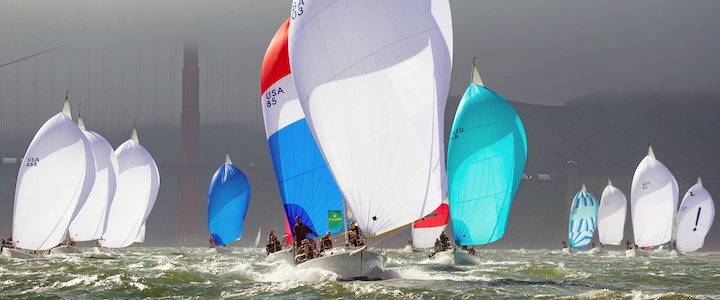
Once the fleet is off the line, the race becomes a sequence of legs: upwind, downwind, reaching, sail changes, passing situations, and mark roundings. Marks are natural choke points, and they’re where rules and boat-handling matter most. Boats converge, crews shift gears quickly, and good teamwork makes all the difference.
Racing is one of the fastest ways to improve your seamanship.
Finishing and Scoring
Most races finish on the same line they started. The race committee records each boat’s finish time or finish order. Some fleets are scored as one-design, where all boats are identical and the first boat across wins. Other fleets use handicap scoring, where different boat types compete with time adjustments so the results reflect sailing performance rather than boat design.
Types of Racing on San Francisco Bay
San Francisco Bay offers nearly every type of racing imaginable, from casual weeknight beer cans to world-class regattas. Most sailors begin with fleet racing, where many boats compete together in classes. The most common “club-level” format is around-the-buoys racing, often set as windward/leeward courses that test both tactics and boat handling. There are also distance races, offshore events, and shorthanded series for sailors who want bigger challenges over time.
Where to Race: San Francisco Bay Yacht Clubs and Series
One of the best things about sailing here is that we’re surrounded by active racing organizations. If you want to watch racing, join a crew, or enter your first series, these are some of the best places to start:
- St. Francis Yacht Club (StFYC) — San Francisco
Racing calendar & event pages: https://www.stfyc.com/racing - Golden Gate Yacht Club (GGYC) — San Francisco
Race registration & results: https://ggyc.org/wp/on-the-water/race-registration-results/ - San Francisco Yacht Club (SFYC) — Belvedere/Tiburon
Regattas & registration info: https://www.sfyc.org/regattas - Berkeley Yacht Club (BYC) — Berkeley Marina
Racing page: https://www.berkeleyyc.org/racing
Weekly series race entry form: https://www.berkeleyyc.org/race-entry - Encinal Yacht Club (EYC) — Alameda
Race schedule & event info: https://www.encinal.org/on-the-water/race-schedule - Richmond Yacht Club (RYC) — Richmond
Racing information: https://www.richmondyc.org/on-the-water/racing - Yacht Racing Association of San Francisco Bay (YRA)
Bay-wide racing hub & resources: https://yra.org - Singlehanded Sailing Society (SSS) — Shorthanded Racing
Race calendar: https://sfbaysss.org/racing/
How to Find a Crew Spot (The Easiest Way to Start Racing)
The simplest way to get into racing is to crew on someone else’s boat first. Most race boats are always looking for reliable, enthusiastic crew — even beginners. Showing up with a good attitude and willingness to learn is often all it takes.
Here are the best local crew-finder resources:
- Latitude 38 Crew List (Bay Area’s #1 crew board)
https://www.latitude38.com/crew-list-home/ - Latitude 38 Crew Party (meet skippers & crew in person)
https://www.latitude38.com/crew-party/ - SF Sailing Racing Crew List
https://sfsailing.com/sailing/index.cfm/crewlist/tindex.cfm?action=crewlist.mobil-crewlist&crewlist=racing - Spinnaker Sailing SF What'sApp Group (our in-house network- Thanks to April Littrell)- Join today!

The Best Way to Get Started This Month
- Post yourself on the Latitude 38 Crew List: https://www.latitude38.com/crew-list-home/
- Show up early at a weeknight series (Berkeley is especially welcoming): https://www.berkeleyyc.org/racing
- Bring gloves, layers, and a good learning mindset.
Ready to Go Racing?
Racing is one of the most exciting and rewarding parts of sailing — and it’s far more welcoming than most people expect. It will make you a sharper sailor, a better crewmember, and part of a community that lives for those perfect evening starts on San Francisco Bay.
So… who’s ready to join the fleet?
Let’s go race sailboats.
