


- Log in to post comments
Most people arrive at their first sailing lesson expecting a classroom. A whiteboard, a diagram of a boat, an hour of talking before anyone touches a rope.
That is not how it goes here. At Spinnaker Sailing, Basic Keelboat 1 is taught entirely on the water, aboard a 21-foot keelboat, with an instructor and on average one other student. By two o'clock on the first day you will have steered the boat yourself and turned it through the wind. Here is what the two days actually look like.
Before day one
You do not need any experience, and there are no prerequisites. What helps is half an hour with our free video lessons first: the parts of the boat, the knots you will use, and how the Andrews 21 is rigged. Watching them means less of the first morning goes on vocabulary, and more of it goes on sailing.
The boat
You learn on the Andrews 21, a small, lively keelboat steered with a tiller. A small boat is the best teacher there is. Every gust and every movement of the tiller shows up at once, so you feel what the boat is doing instead of reading about it. We wrote more about that in why we start you on a tiller.
The first morning
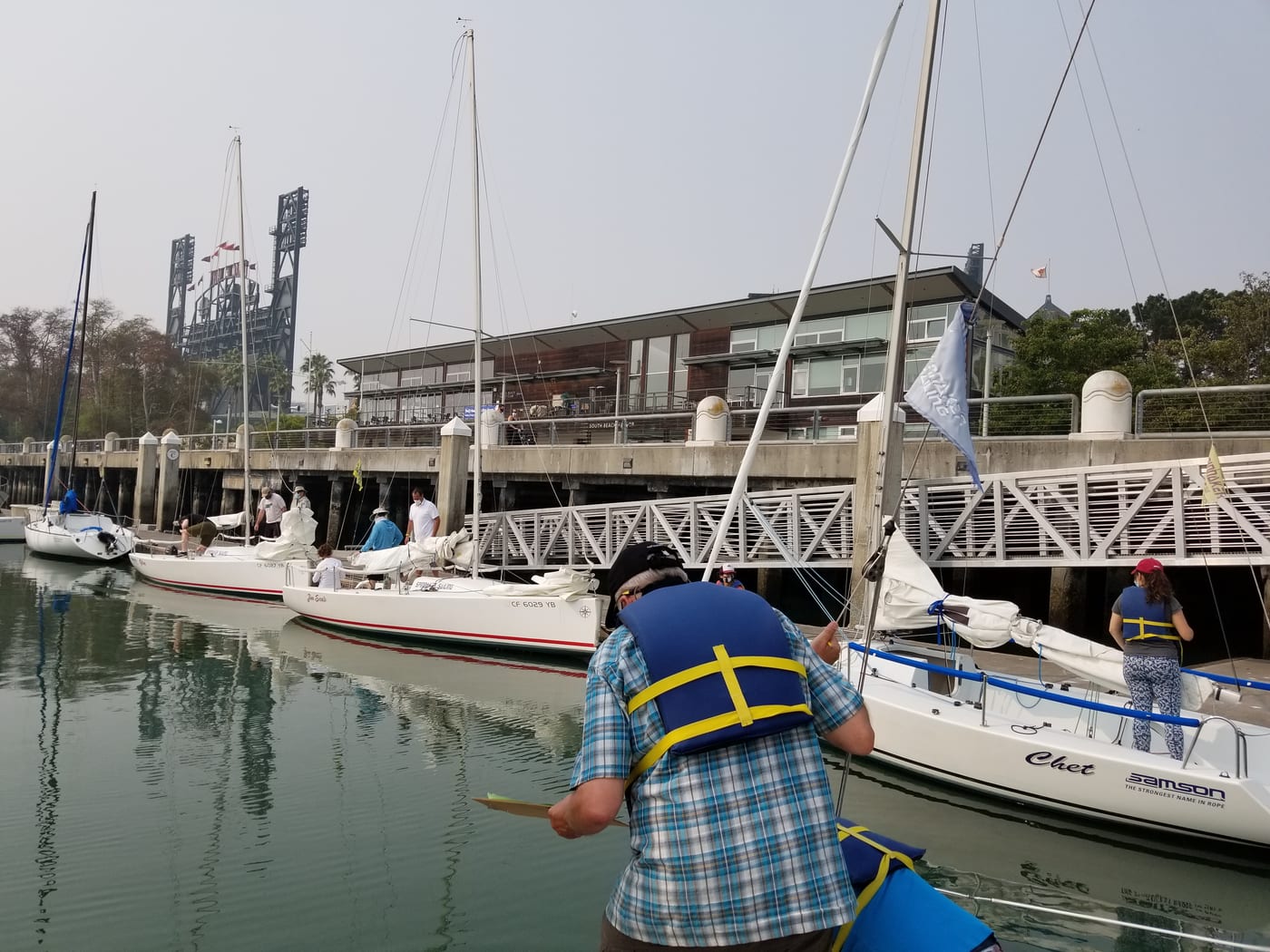
Class runs from 10 in the morning until 2 in the afternoon, and it starts aboard the boat at the dock in South Beach Harbor. First come introductions, then the names of things: bow and stern, port and starboard, the standing rigging that holds the mast up and the running rigging you pull on. Then the sail itself, and how a boat sails both upwind and downwind.
The idea that unlocks everything is the points of sail: the angles a boat can sail at relative to the wind, and the dead area straight into the wind where no sailboat can go. Once that clicks, every instruction afterwards makes sense.
Then you go sailing
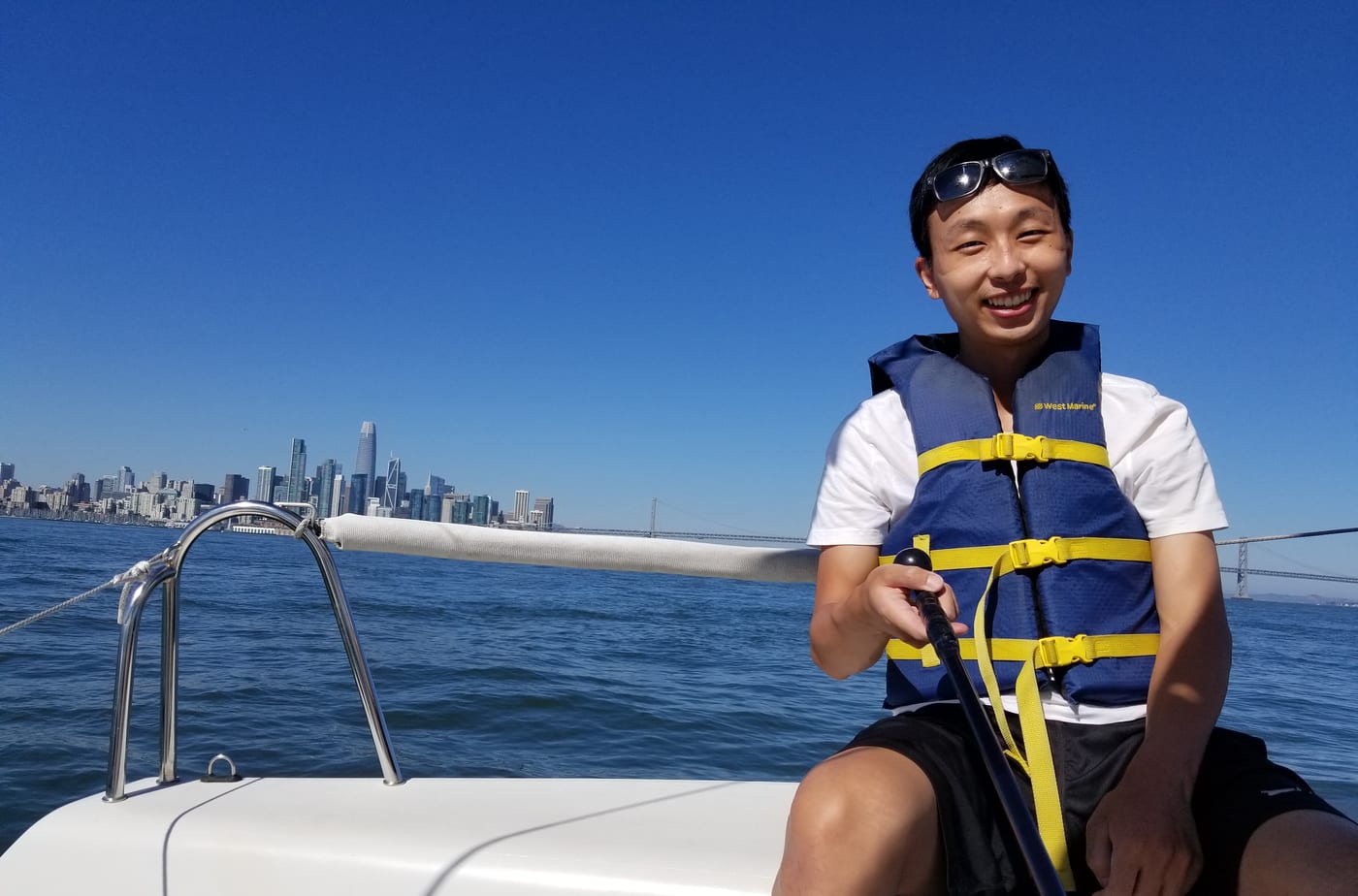
After a safety briefing you set up the jib and leave the dock. The rest of the day is practice: steering a course, tacking (turning the bow through the wind) and gybing (turning the stern through it), again and again until the moves stop needing thought. Along the way you learn the navigation aids you pass and how to spot a wind shift. You finish by putting the boat away properly, and you go home with a little homework.
Day two
The second day starts with your questions and a look at the homework, then builds on day one:
- Reefing. Making the sails smaller when the wind picks up, for both the mainsail and the jib, then practicing it on the water.
- Right of way. Who gives way to whom: port against starboard, overtaking, and power against sail.
- Man overboard. How to bring the boat back to someone in the water, practiced until it is routine.
Then you put the boat away, and you have finished Basic Keelboat 1.
What to bring
- Casual clothes in layers, and a jacket. Even on a warm day, the wind on the water cools things down fast.
- Sunscreen, a hat, and sunglasses on a cord.
- Shoes with soft, light-colored soles. Sneakers or deck shoes are ideal; black soles leave marks on the boats.
- A snack.
Forgot something? We sell sunscreen, sunglasses and hats in the office at the harbor. And we are at Pier 40, not Pier 39: about half a mile south of the Bay Bridge, next to the ballpark.
After Basic Keelboat 1
Basic Keelboat 1 does not carry a certificate on its own. It is the first half of ASA 101, and Basic Keelboat 2 completes it. Weekend classes run Saturday and Sunday, midweek classes run Monday and Tuesday, and many students take the two courses back to back.
If you are not sure yet whether sailing is for you, this is the place to find out. Try Basic Keelboat 1, and if you decide to keep going, everything you paid for it is credited toward any of our sailing club memberships. See the course details, or book a class online.
