


- Log in to post comments
Most people choose a sailing school the way they choose a restaurant: the first good-looking result, a price that seems fair, and a date that works. That is not a terrible way to do it. But a few questions asked up front will tell you much more about what the next few months will actually be like.
Here are the seven we would ask if we were the ones shopping. We have put our own answers after each one, so you can hold us to the same standard.
1. Which certification will I get?
In the United States the two big systems are the American Sailing Association (ASA) and US Sailing. Both are national, and both are widely recognized. What matters most is that the certificate you earn is one the boats you want to sail later will accept.
Our answer: we teach the ASA system, from ASA 101 through 104 and beyond. Sailors certified through US Sailing can skip our written checkout exams when they come to rent from us.
2. How many students share an instructor?
This is the number that decides how much time you spend at the helm. With five students on a boat, you steer for a fifth of the day. With two, you steer for half of it.
Our answer: our classes average two students per instructor.
3. How much of the course is on the water?
Some theory on land is no bad thing, but you learn to sail by sailing. Ask how many hours you will actually spend under way, not just how long the course lasts.
Our answer: all of the class time is on the water. The theory is taught aboard, and our free video lessons cover the vocabulary before you arrive.
4. What boat will I learn on?
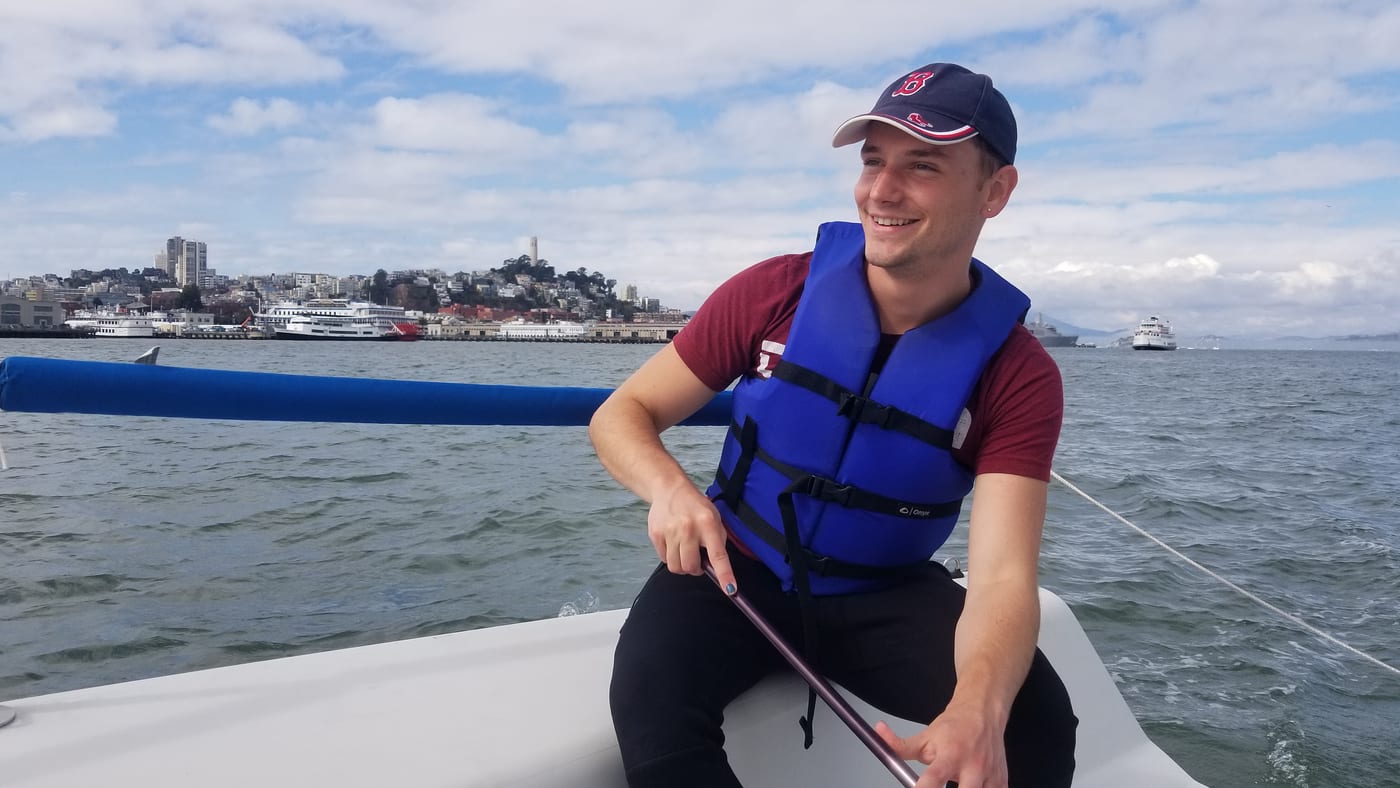
A small boat steered with a tiller is the best teacher there is, because it answers every movement you make. A big, comfortable boat is pleasant, but it hides your mistakes. Ask what you will learn on, and when you move up.
Our answer: you start on the Andrews 21, a small, lively keelboat with a tiller, and move up to bigger boats in the later courses. More on that in why we start you on a tiller.
5. Where will I be sailing?
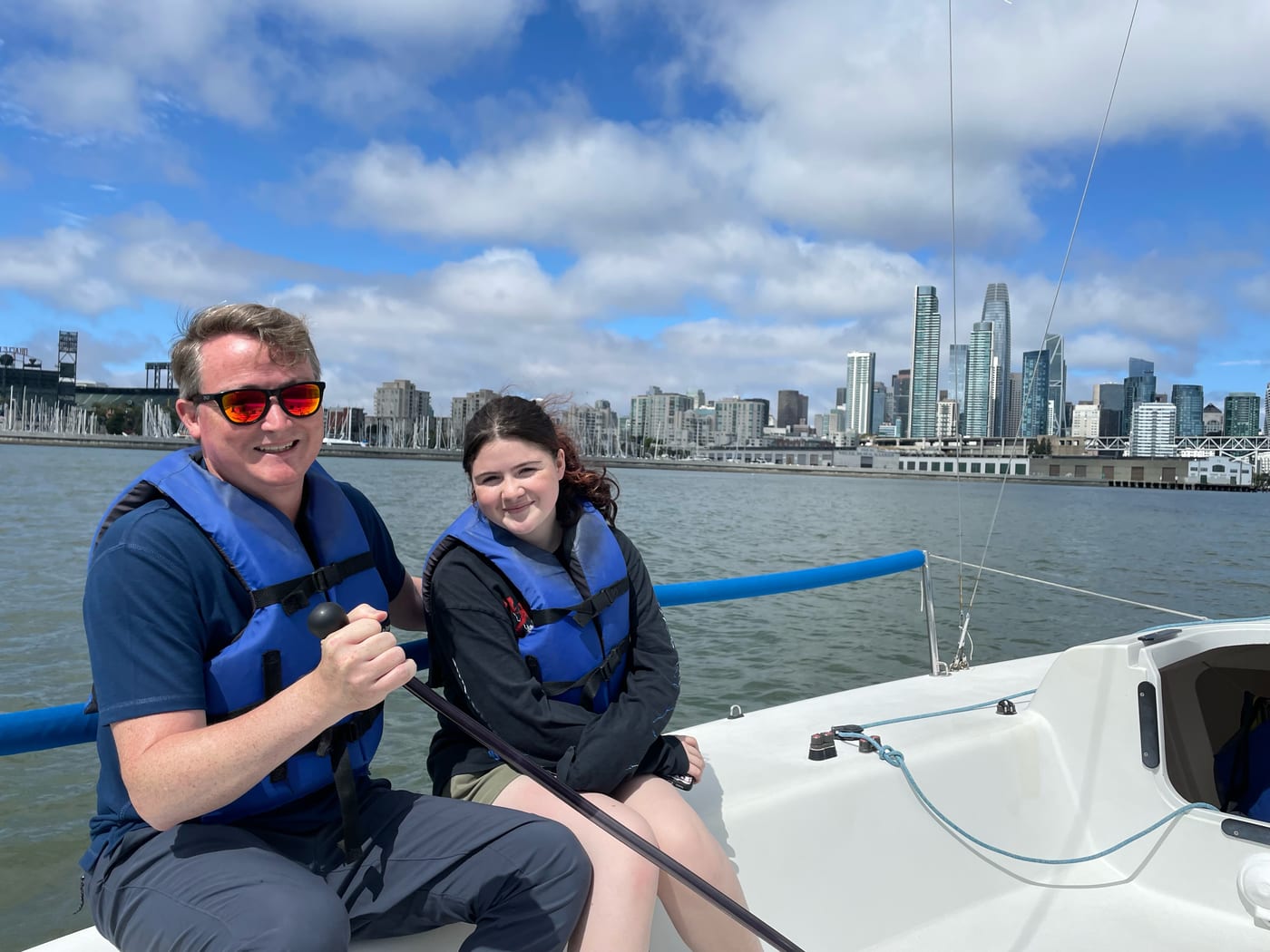
Some schools teach on sheltered lakes and harbors. San Francisco Bay is not sheltered: it is windy, it has strong currents, and it is busy. That makes it harder at first, and it makes you a much better sailor. Ask how far the dock is from open water, too, because time spent motoring down a channel is time not spent sailing.
Our answer: we sail from Pier 40 in South Beach Harbor, about five minutes from the berth to open water, with no long channel to motor through.
6. What will it really cost?
Course prices are easy to compare. The total is harder. Ask whether certification fees are included: ASA charges its own registration and test fees on top of the course. Ask whether courses come cheaper as a package, and what it costs to keep sailing once you are certified.
Our answer: our course prices are published, along with the ASA fees and the package discounts, so you can add it all up before you call us.
7. What happens after the course?
This is the question almost nobody asks, and it matters most. New skills fade fast without time on the water. Ask how you will keep sailing once the course is over: rentals, a club, crewing with other students.
Our answer: students can sign up for unlimited use of the Andrews 21s while they learn, join the sailing club, or find crew and rides through our WhatsApp crew list.
The short version
Whichever school you choose, look for:
- A recognized certificate you can use later
- As few students per instructor as possible
- Most of the course spent on the water
- A small boat to learn on
- Real conditions, close to the dock
- An honest total cost
- A plan for after the course
If you want to try before you decide, take Basic Keelboat 1. If you stay, what you paid for it is credited toward any of our sailing club memberships. And if you are wondering what that first day involves, here is what actually happens.
