


- Log in to post comments
It is one of the questions people ask most often before they book, and they usually ask it a little sideways. They have wanted to sail for years. They have watched the boats from the Embarcadero, or sailed once on a friend's boat, and now the kids are grown or work has eased off, and they wonder whether they left it too late.
The short answer is no. Sailing is one of the few sports where patience, judgment and experience count for more than strength or speed. Here is what it actually asks of you, and how to start.
What sailing really asks of your body
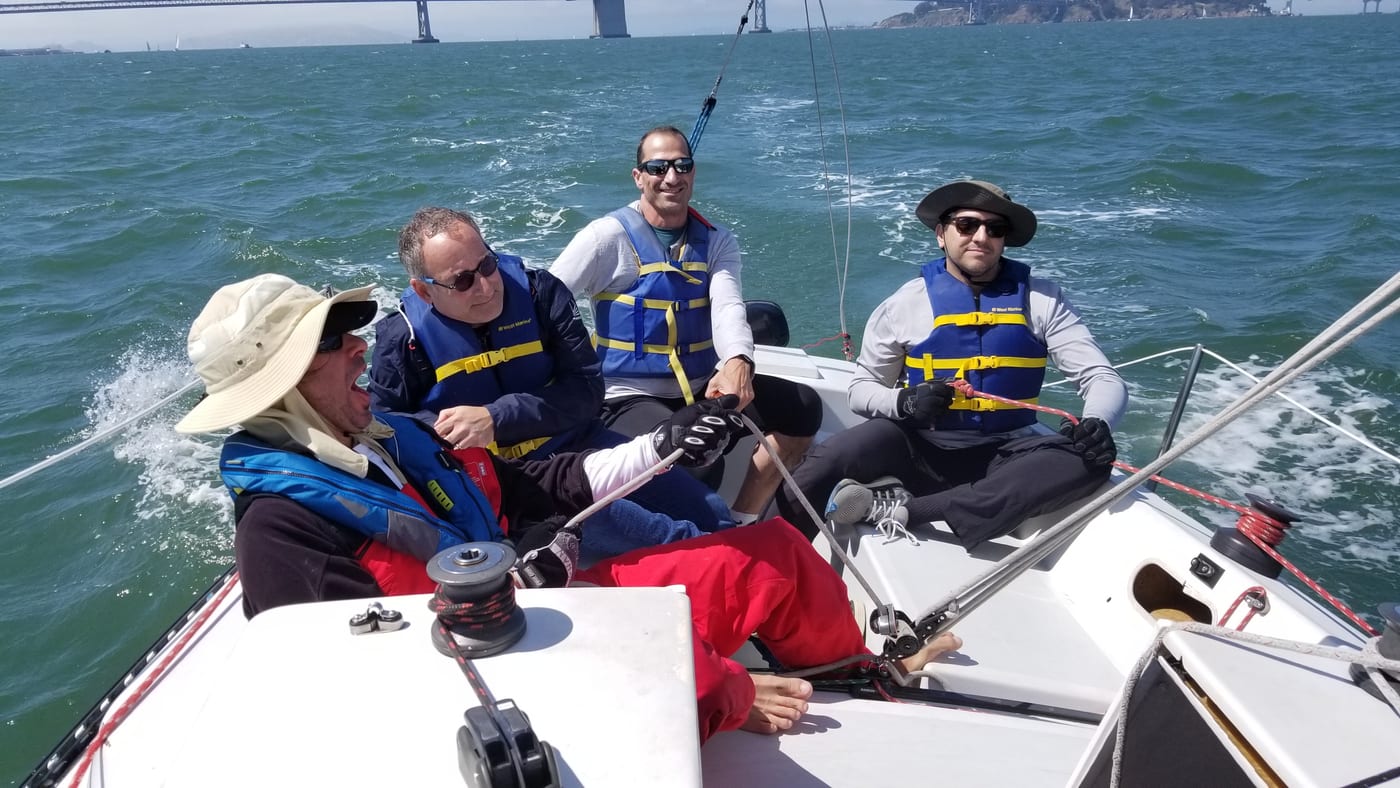
Less than most people imagine. On a keelboat the work is mostly pulling on lines, turning a winch handle, moving from one side of the cockpit to the other, and steering. You need reasonable balance, enough grip to hold a line, and the ability to step on and off a boat at the dock. You do not need to be strong, fast or young.
What matters more is how you use your body. Good sailors let the winches do the heavy pulling, keep one hand for themselves and one for the boat, and move deliberately rather than quickly. It is a style that suits anyone who would rather be careful than impressive.
If you have a particular concern, a knee or a back, talk to your doctor first, and mention it when you book.
Why a keelboat is a kind place to start
We teach Basic Keelboat 1 on the Andrews 21, a small keelboat steered with a tiller. A keelboat carries a heavy keel under the hull, and that weight resists the wind's push and steadies the boat. It leans, which surprises everyone the first time, but it is far steadier than the small dinghies many people picture when they think of learning to sail. Most of the time you are sitting in the cockpit.
A small boat is also a good teacher. Every gust shows up at once in the tiller, so you feel what the boat is doing instead of reading about it. We wrote more about that in why we start you on a tiller.
What gets easier with age
- Patience. Sailing rewards people who watch the water, wait for the right moment and do not force things.
- Listening. Students who ask questions and take advice learn fast, whatever their age.
- Judgment. Knowing when not to go out is half of good seamanship.
- Time. Plenty of people only come to sailing once they can give it a weekday.
How lessons work here
Everything happens on the water. Basic Keelboat 1 runs over two days, 10 in the morning to 2 in the afternoon, on a weekend or midweek on a Monday and Tuesday. There are no prerequisites, and a class averages two students with an instructor, so you go at your own pace rather than a group's and there is always time for your questions.
If you want to know exactly what happens, our guide to your first sailing lesson walks through both days step by step. If you are still comparing schools, here are seven questions to ask any sailing school.
Keep going after the course
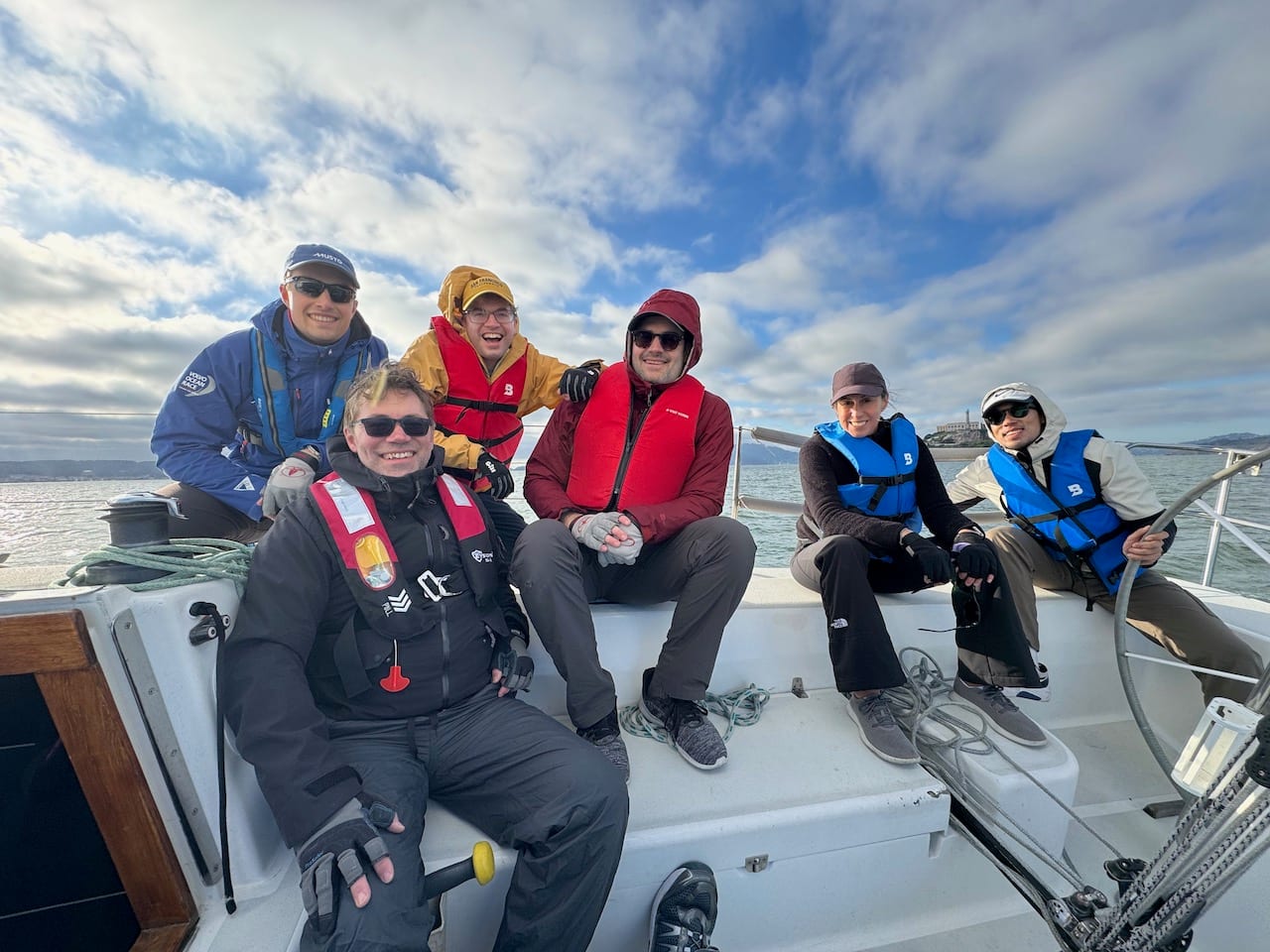
The hardest part of learning anything later in life is keeping it up between lessons. That is what club sails are for: organized sails for students and sailing club members, a low-pressure way to get time on the water. Club members get one club sail a month free.
And there is no ceiling. After Basic Keelboat comes Basic Coastal Cruising, and after that, bigger boats on the Bay with your own friends and family aboard.
Try it first
If you are not sure yet, take Basic Keelboat 1 on its own. If you decide to keep going, everything you paid for it is credited toward any of our sailing club memberships. Our free video lessons let you learn the names of things at home first.
Then book a class online, or call us on 415-543-7333 and ask whatever you were going to ask. Nobody here will tell you that you are too old.
